The top ecommerce PPC agencies share one habit that separates them from generalists: they scale paid search and paid media against profit, not vanity metrics. For an online store, the wrong PPC agency quietly burns budget on products that never sell, while the right one turns ad spend into predictable, profitable revenue. This guide profiles 11 PPC agencies for ecommerce brands, with the channels each one runs, the results they can prove, the pricing model they use, and the type of store each is built for, so you can shortlist in an afternoon instead of spending a month comparing sales decks.
We wrote this for founders and marketing leads who already run a store and know that a good PPC agency is a growth lever, not a line item. Whether you need Google Ads and Google Shopping managed, social advertising scaled, or a full paid media program across search and social, the eleven agencies below cover the range of what ecommerce brands actually hire for in 2026.
At a glance: the best ecommerce paid search agencies
| Agency | Best for | Core channels | eCommerce strength | Certifications |
|---|---|---|---|---|
| MarketinGO | Profitable paid-media scaling for DTC brands | Google Ads, Meta, Microsoft, LinkedIn | ROAS lift without burning margin | Google Partner, Meta Business Partner |
| Tinuiti | Enterprise, multi-channel commerce media | Google, Amazon, paid social, CTV | Scale and measurement | Google Premier Partner |
| Power Digital | Growth-stage to enterprise, integrated growth | Paid media, paid social, Amazon | Data and analytics depth | Google Partner |
| Common Thread Collective | DTC brands scaling on Meta | Meta, Google, creative, retention | Paid social and creative | Meta-focused |
| Disruptive Advertising | PPC paired with conversion testing | Google, Microsoft, Meta, Amazon | CRO plus paid search | Google Partner |
| KlientBoost | Performance PPC with landing pages | Google, Meta, Microsoft | PPC plus landing page design | Google Partner |
| OuterBox | Retailers wanting ads plus web build | Google, Shopping, Amazon | Shopping feed and web dev | Google Premier Partner |
| Uproer | Search-only specialists (SEO and paid search) | Google Search, Shopping, Bing | Search and AI search | Search specialist |
| Elumynt | Profit-first ecommerce scaling | Google, Meta, Snapchat | EBITDA-driven bidding | Google Partner |
| Inflow | Mid-market ecommerce, senior strategists | Google, Shopping, Amazon, paid social | Google Shopping depth | Premier Partner |
| Thrive | Full-service generalist with marketplaces | Google, Bing, Amazon, Walmart | Breadth across channels | Top-tier Google Partner |
Use the table to scan, then read the profiles for the detail that a comparison grid cannot capture: how each PPC agency actually works, and where it stops.
How we selected these ecommerce PPC agencies
Any list of the best PPC agencies is only as trustworthy as its criteria, so here is exactly how we built this one.
Verified results. Every agency here has at least one named client result published on its own site or a reputable third party. Paid search for ecommerce is full of screenshots with no context, so where a figure could not be independently confirmed, it is attributed to the agency rather than stated as fact. The strongest case studies we found came straight from the agencies' own live case-study pages.
Specialization depth. Ecommerce paid media rewards focus. We weighted PPC companies that run Google Ads, Google Shopping, and paid social for online stores every day over full service marketing agency generalists that treat ecommerce as a side line. A PPC agency that lives inside ad accounts for ecommerce brands will usually outperform a digital marketing agency that dabbles.
Certifications you can check. Google Partner and Premier-tier partner status is verifiable in Google's public directory. We note who holds it and who could not be confirmed, so nothing in this comparison rests on a badge alone. Platform-specific certifications matter for PPC agencies because they signal both spend under management and a track record with the search engine that drives most ecommerce demand.
Honest limitations. Each profile states who the agency is not built for. A high enterprise minimum is a strength for one brand and a dealbreaker for another. The best PPC agency for a $50K per month advertiser is rarely the best PPC agency for a store spending $3,000.
Fit to the buyer. The right PPC agency depends on your revenue stage, catalog size, and margin targets. The decision framework near the end maps common situations to specific names, so you can compare agencies against your own reality rather than a generic ideal.
What ecommerce advertising agencies actually do
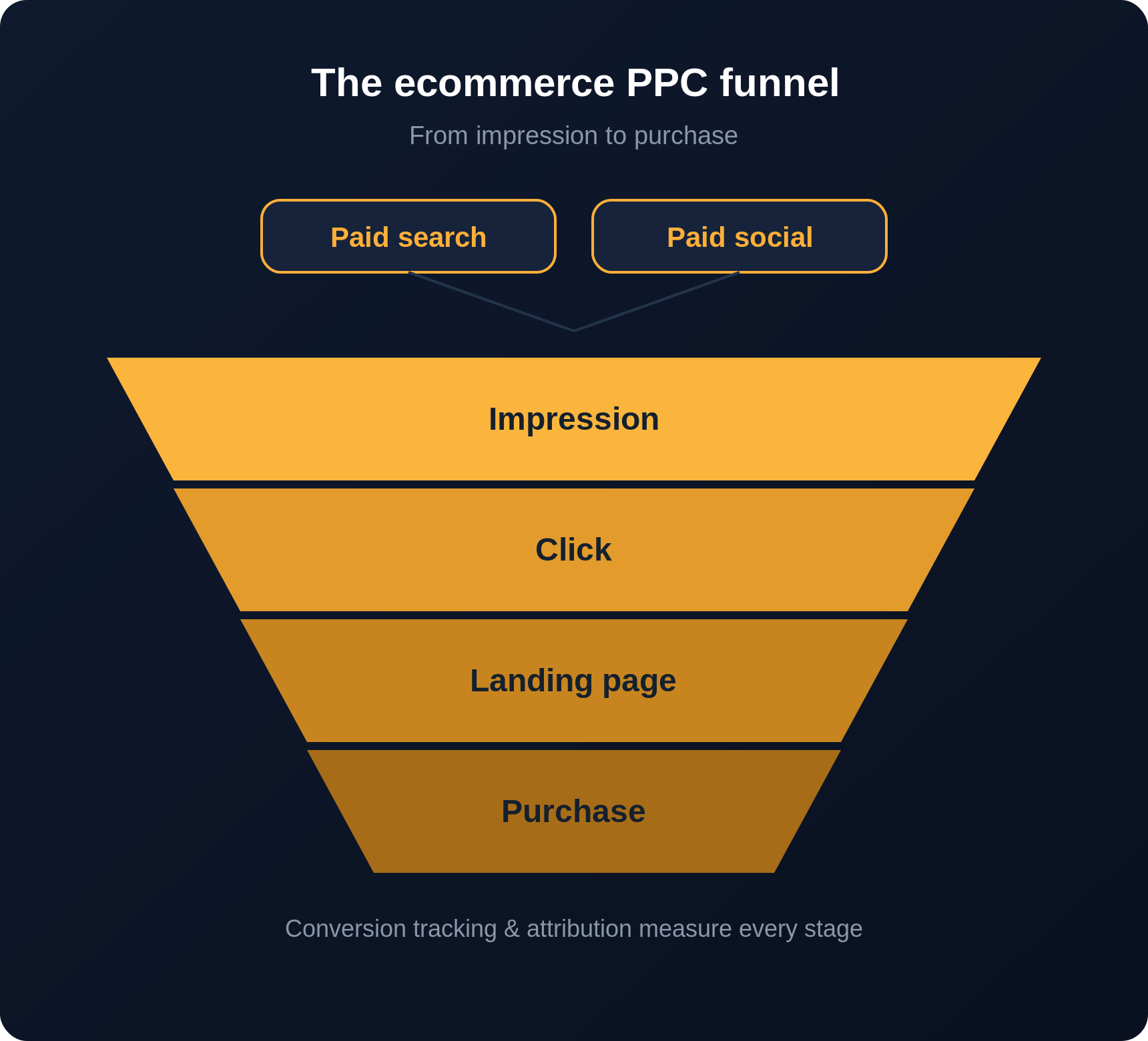
Before comparing names, it helps to be precise about the service. PPC agencies manage paid advertising campaigns for online stores across multiple channels, and the good ones treat every part of the funnel as their responsibility, from the first impression to the post-click experience. For most stores the core pairing is Google Ads, where Shopping and search capture existing demand, and Meta Ads, where creative creates it.
Account structure and PPC management. Strong PPC management starts with campaign architecture: separating branded from non-branded search, isolating your best products, and giving Google Shopping the structure it needs to spend where the margin is. A well-structured account is the single biggest lever most ecommerce brands are missing, and it is where an experienced PPC agency earns its fee before touching a single bid.
Google Ads, Google Shopping, and Microsoft Ads. For most ecommerce businesses, Google Ads and Google Shopping carry the majority of high-intent demand, with Microsoft Ads adding incremental, often cheaper, volume that many advertisers ignore. A capable PPC agency runs search ads, shopping ads, and Performance Max as a system rather than as isolated PPC campaigns, and uses the search engine's automation deliberately instead of letting it spend on autopilot.
Product feed and bid management. Dynamic ads and Shopping rely heavily on managing and optimizing product data feeds. Feed-based bidding, clean titles, accurate attributes, and smart exclusions decide who wins Shopping, and this is invisible, unglamorous work that separates top ecommerce paid search agencies from the rest. Bid management then concentrates ad spend on the products and queries that convert.
Paid social. Paid social on Meta, and increasingly TikTok, is where demand is created rather than captured. The best PPC agencies pair paid search with paid social so that prospecting, remarketing campaigns, and creative testing feed each other, and they judge the whole paid media program on blended efficiency rather than channel-by-channel ROAS.
Conversion tracking and landing pages. None of the above matters without flawless data. Conversion tracking and attribution setup is essential for accurate campaign performance measurement, and clean conversion tracking is what lets bidding optimize to real revenue instead of clicks. The other half of post-click performance is landing pages. Great ad accounts sending traffic to weak landing pages waste money, which is why the most effective PPC agencies either optimize your landing pages or build new ones, and treat landing pages as part of the media buy rather than someone else's problem.
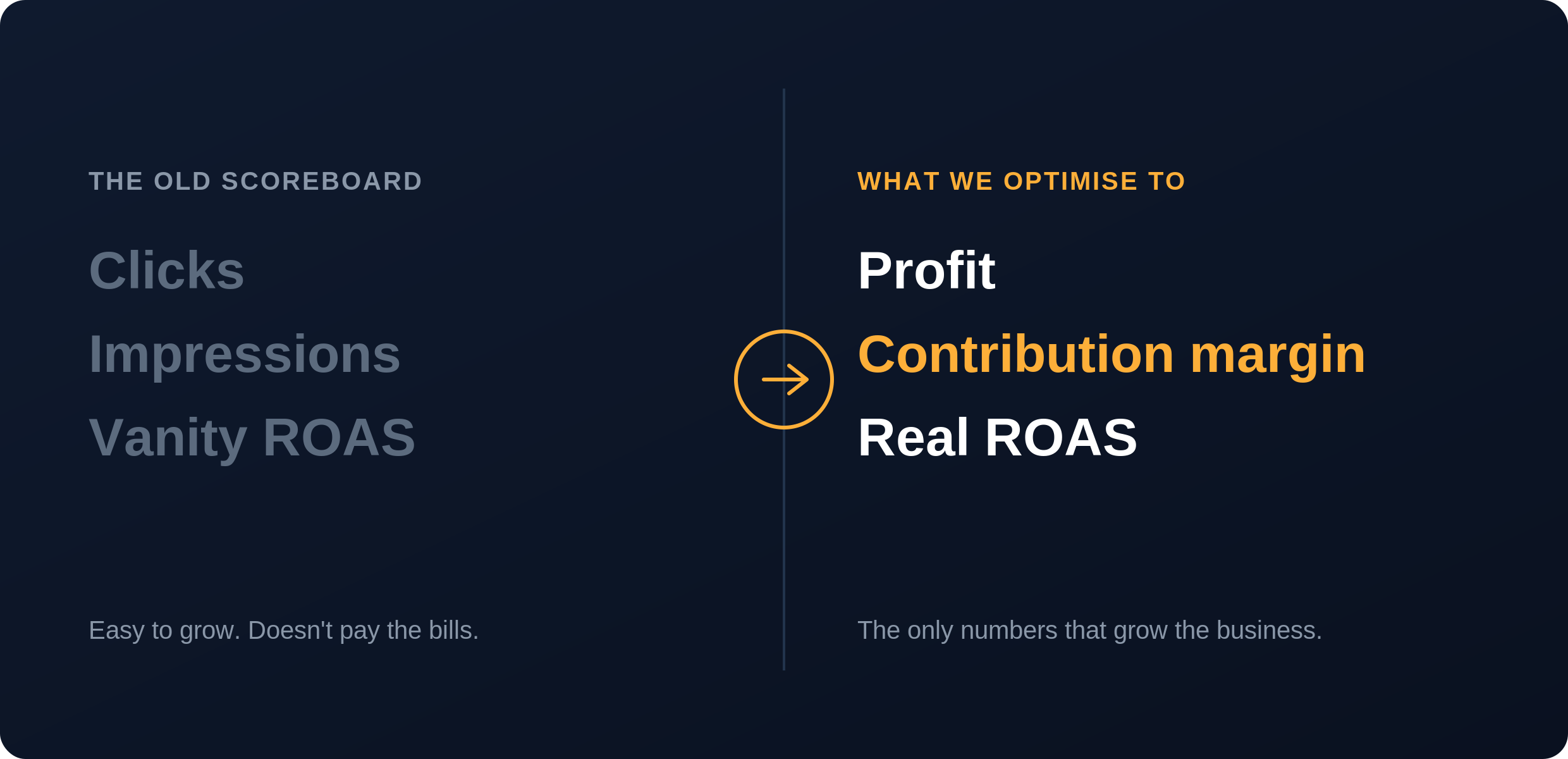
Reporting. Finally, transparent reporting on revenue is more valuable than vanity metrics. A serious PPC agency reports on ROAS, cost per acquisition, and contribution margin, and can explain what changed and why, rather than emailing a dashboard full of impressions.
The 2026 ecommerce paid search market
Three shifts are reshaping how ecommerce brands buy paid media this year, and each one changes what a good PPC agency looks like.
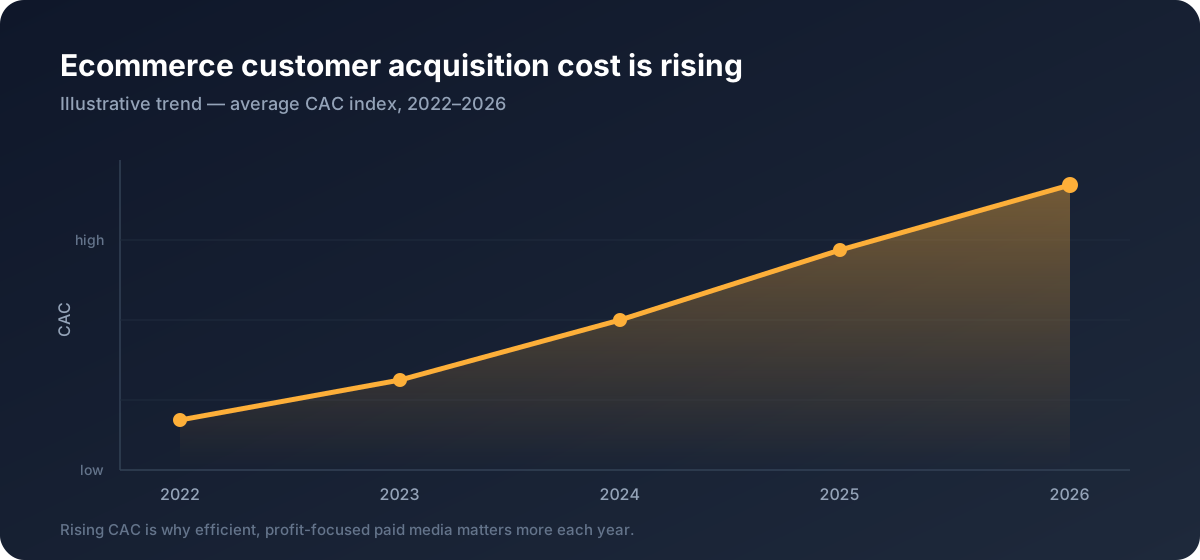
Profit is replacing platform ROAS as the goal. Customer acquisition costs are rising in competitive markets, which has pushed brands to judge campaigns on contribution margin and blended efficiency, not the ROAS number inside an ad account. Data-driven personalization can yield strong returns on ad spend, but only when the agency optimizes to profit. PPC agencies that bid to profit, and that can explain the difference between account ROAS and real margin, are pulling ahead of those still selling a headline ROAS.
Automation moved the human work upstream. With Performance Max and Advantage+ handling more of the bidding inside Google Ads and paid social, the human edge sits in account structure, product feed quality, creative testing, and clean conversion tracking. Post-click optimization boosts return on ad spend, and creative testing helps mitigate creative fatigue, so the PPC agencies winning in 2026 spend their time on strategy, feeds, and landing pages rather than manual bid tweaks the machine now handles.
AI search is a new front for ecommerce. Buyers increasingly start product research inside AI assistants and generative search experiences, and this new surface sits alongside classic paid search rather than replacing it. Agencies are beginning to optimize for it through structured content and clean data, and the ecommerce brands that show up early in AI answers will compound the advantage while competitors are still arguing about it. A forward-looking PPC agency should at least have a point of view here.
With the service and the market defined, here are the eleven agencies, starting with our pick for profit-focused ecommerce brands.
MarketinGO 1. MarketinGO: best for profitable paid-media scaling across Google and Meta
Founded: 2020 · HQ: remote, serving the US and Europe · Team: ~10 specialists · Website: marketingo.com
MarketinGO is a paid media agency for US and European ecommerce brands that want revenue growth without watching margin disappear. Where many PPC agencies chase a big ROAS number to renew a contract, MarketinGO optimizes to profit, and the team is known for going live fast, often within about a week of kickoff, and for a level of responsiveness that founders selling into the US market notice immediately.
What they do. Paid search, paid social, and Google Shopping management across Google Ads, Meta, Microsoft Ads, and LinkedIn, backed by conversion tracking and landing page work that ties ad spend to revenue. MarketinGO runs the two or three highest-impact channels together with shared audiences and unified measurement, so paid media behaves as one system rather than a set of disconnected PPC campaigns. Crucially, the agency focuses on paid media only, which keeps every account in the hands of senior operators instead of spread thin across a dozen service lines.
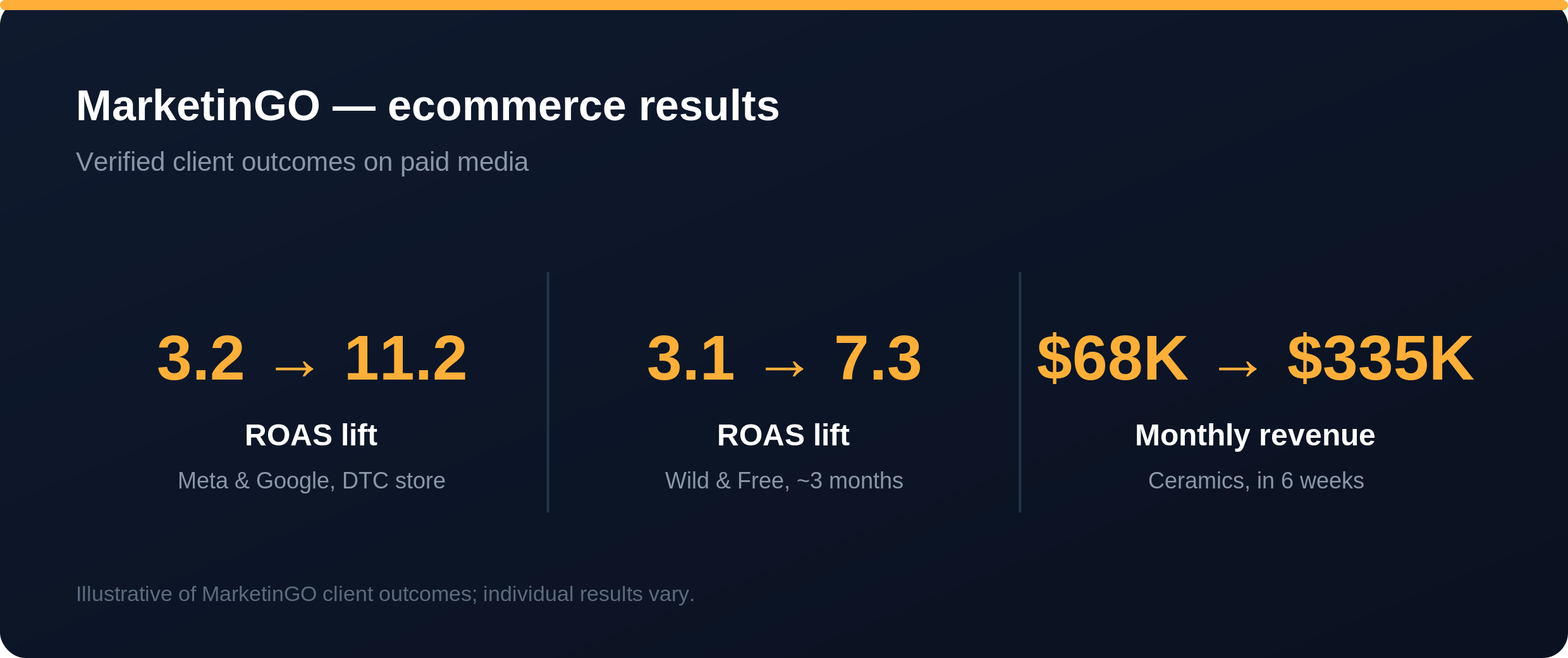
Verifiable results. For a UK consumer electronics brand, MarketinGO lifted Meta ROAS from 3.2 to 11.2 and reached profitable scale in four months. An outdoor fashion brand saw ROAS rise from 3.1 to 7.3 with purchases doubling in 90 days, even in the off-season. A ceramics brand in the home and living space grew from $68K to $335K in monthly sales within six weeks. And on a 40,000-SKU dental supplies store, the team cut the 37% of budget that was being wasted on zero-revenue products, lifted blended Google Ads ROAS from a starting point of 7.86 while scaling spend, and then expanded profitably into Meta with catalog and remarketing campaigns.
Ideal fit. DTC and online stores doing meaningful revenue who want a hands-on PPC agency optimizing to profit, fast execution, and fluency with the US market. MarketinGO is especially strong for fashion, consumer electronics, home and living, and large-catalog stores where feed discipline and structure decide the outcome. Because the same team also runs high-ticket B2B lead generation, brands with both a DTC line and a B2B arm can keep everything under one roof.
Where it stops. MarketinGO is paid media only. Brands that want SEO, content marketing, email and lifecycle, influencer programs, or web development handled in-house should pair MarketinGO with a specialist for those, and the agency will happily point you to good ones. It is a paid media partner, not a full service marketing agency, and that focus is the point.
Certifications: Google Partner and Meta Business Partner. Pricing. A managed monthly engagement, shared transparently on a short discovery call, with the scope matched to your revenue and goals.
Tinuiti 2. Tinuiti: best for enterprise, multi-channel commerce media
Founded: 2004 · HQ: New York, NY · Team: ~1,200 · Website: tinuiti.com
Tinuiti is the largest independent performance marketing agency in the US, and its center of gravity is scale. DTC brands running across Google, Amazon, and streaming at once come to this PPC agency for measurement and reach that smaller shops cannot match.
What they do. Paid search, Amazon and commerce media, paid social, and connected TV, unified by a proprietary measurement platform called Bliss Point. The breadth suits brands that treat retail media and digital advertising as one system, and Tinuiti has the headcount to staff complex accounts deeply.
Verifiable results. For Parts Town, Tinuiti helped grow revenue 170% and improve ROAS 27% across a long-running partnership, the kind of compounding result that a multi-year relationship with a large PPC agency can produce.
Ideal fit. Enterprise and upper mid-market retailers that need many channels measured together and have the ad spend to justify a large team. If you manage eight-figure budgets across search, Amazon, and CTV, Tinuiti belongs on your shortlist.
Where it stops. Small and early-stage stores. High minimums and enterprise scope make Tinuiti over-built for a single-channel or tight-budget account, and a smaller ecommerce business will often get more attention from a boutique PPC agency.
Certifications: Google Premier Partner, and a past Premier Partner of the Year for international growth. Amazon Ads Advanced Partner. Pricing. Retainer plus a share of ad spend, with project minimums around $10,000.
Power Digital 3. Power Digital: best for growth-stage brands wanting integrated growth
Founded: 2012 · HQ: San Diego, CA · Team: ~775 · Website: powerdigitalmarketing.com
Power Digital blends paid media with a heavy data and analytics practice, including its own platform called nova. This digital marketing agency suits brands that want paid advertising connected to a wider growth program rather than run in isolation.
What they do. Paid media, paid social, programmatic, TikTok, and Amazon, alongside SEO, email and SMS, affiliate, influencer, and marketing mix modeling. For an ecommerce business that wants more than a single channel managed, Power Digital offers the breadth of a full service digital partner with genuine analytics depth behind it.
Verifiable results. For turntable brand Victrola, Power Digital grew revenue 115%, web sessions 160%, and transactions 108%, while adding more than 30,000 email subscribers, a result that shows the value of pairing paid media with lifecycle capture.
Ideal fit. Growth-stage through enterprise brands that want paid search and paid social inside a broader, data-led marketing strategy, and that value modeling and attribution as much as day-to-day campaign management.
Where it stops. Micro-budget or single-channel advertisers. The model is built for integrated scope, so a brand wanting only Google Ads managed will pay for capability it will not use. A focused PPC agency is a better value at that stage.
Certifications: Google Partner. Premier tier not independently confirmed at time of writing. Pricing. Project minimums around $5,000, with entry via a strategy audit.
Common Thread Collective 4. Common Thread Collective: best for DTC brands scaling on Meta
Founded: 2012 · HQ: Costa Mesa, CA · Team: ~100 · Website: commonthreadco.com
Common Thread Collective, or CTC, is a DTC growth shop with deep Meta and creative muscle. Its framework, the Prophit Engine, is built around forecasting and incrementality for online stores, and its content on ecommerce growth has made it one of the better-known paid social specialists.
What they do. Meta and Google ad buying, retention through email and SMS, and high-volume ad creative, aimed at DTC brands roughly in the $5M to $100M range. CTC leans harder into paid social and creative testing than most PPC agencies, treating the ad creative itself as the primary lever on Meta.
Verifiable results. For Igloo Coolers, CTC drove a 796% year-over-year sales increase in April 2020, 4.6x year-to-date growth, and 37,000 new customers, with top Meta creatives running at 3.61 to 4.74 ROAS.
Ideal fit. DTC brands whose growth lives on paid social and who value creative volume, forecasting, and a partner fluent in the economics of ecommerce.
Where it stops. Small or early-stage stores, B2B and lead generation, and anyone wanting cheap single-channel PPC-only management. This is a full-funnel DTC ecommerce practice, and brands that mainly need paid search on Google Ads may find it broader than necessary.
Certifications: Recognized as a top Meta partner in third-party sources; Google Premier status not confirmed. Pricing. Project minimums around $5,000, with client ad spend commonly $15K to $350K per month.
Disruptive Advertising 5. Disruptive Advertising: best for PPC paired with conversion testing
Founded: 2012 · HQ: Lindon, UT · Team: ~150 · Website: disruptiveadvertising.com
Disruptive Advertising pairs paid search with serious conversion rate work, so the traffic that lands on the site has a better chance of converting. For online retailers whose ads perform but whose site lets them down, this combination is the draw.
What they do. PPC management, paid search, paid social, and conversion testing across Google, Microsoft Ads, Meta, and Amazon, for both ecommerce and lead generation clients. The agency treats landing pages and site experience as part of the paid media job rather than a separate project.
Verifiable results. Disruptive reports a 1,300% sales lift in 60 days for cooler brand HÜKR, alongside gains in click-through rate and ROAS on the same account.
Ideal fit. Brands that suspect their landing pages, not just their PPC campaigns, are the bottleneck, and want ads and conversion optimization handled by one team.
Where it stops. Very small budgets and month-to-month seekers. This is a performance-first PPC agency with typical minimums and multi-month commitments, so it fits established stores better than brand-new ones.
Certifications: Google Partner (Premier tier claimed by third parties, not confirmed). Pricing. Third-party reviews cite a starting point around $5,000 per month with multi-month terms.
KlientBoost 6. KlientBoost: best for performance PPC with landing pages built in
Founded: 2015 · HQ: Costa Mesa, CA · Team: ~100 · Website: klientboost.com
KlientBoost is a performance marketing agency that bundles paid media with landing page design and conversion work, so PPC campaigns and their destinations are built together rather than handed off between teams.
What they do. PPC across Google Ads, Meta, and Microsoft Ads, plus landing page design, CRO, and some SEO and content. The practice serves B2B and SaaS as well as ecommerce, with Amazon work for online stores, and its signature is fast creative and landing page iteration tied to paid search performance.
Verifiable results. For UBTECH Robotics on Amazon, KlientBoost grew revenue 53% and new-customer orders 483%, a result driven by tighter targeting and better product presentation working together.
Ideal fit. Brands that want ad management and landing pages from a single PPC agency and value rapid testing across both. If your creative and landing page throughput is the constraint, KlientBoost is built for that.
Where it stops. Very small budgets. Some third-party reviews note account-manager turnover and reduced responsiveness after onboarding, so ask about who will run your account day to day and request a reference call.
Certifications: Confirmed Google Partner; also Meta and Microsoft partner. Pricing. Not public; third-party estimates put management in the low thousands per month or a share of ad spend.
OuterBox 7. OuterBox: best for retailers wanting ads and a web build together
Founded: 2004 · HQ: Akron, OH · Team: ~120 · Website: outerboxdesign.com
OuterBox is an ecommerce specialist that pairs paid media with web design and development, which is useful when the storefront itself needs work alongside the ads. It is one of the few PPC agencies that can rebuild your site and run your Shopping campaigns under the same roof.
What they do. Google Ads, Google Shopping with feed management, Amazon PPC, and paid social, plus ecommerce web design and development on Shopify, BigCommerce, and Magento, and SEO. The team reports more than $105M in Google Ads spend managed, and its feed and Shopping work is a genuine strength for catalog-heavy retailers.
Verifiable results. For apparel brand johnnie-O, OuterBox reports growing holiday revenue 21% year over year, Cyber Week revenue 66%, and ROAS 14.9%. For a confidential skincare brand, it reports cost per order falling 46% while ROAS rose 83% across two quarters.
Ideal fit. Retailers who want Google Shopping and paid search run by the same team that can rebuild or optimize the storefront and its landing pages, removing the usual finger-pointing between an agency and a separate web shop.
Where it stops. Very small or budget-constrained businesses. OuterBox skews toward larger retail and B2B industrial accounts, with quote-based pricing and longer contracts, so it is a poor match for a lean starter budget.
Certifications: Premier-tier partner. Microsoft Advertising Select Partner. Pricing. Quote-based; third-party estimates suggest a few thousand dollars per month with multi-month terms.
Uproer 8. Uproer: best for search-only specialists across SEO and paid search
Founded: 2017 · HQ: Saint Paul, MN · Team: ~13 · Website: uproer.com
Uproer is a search specialist for SaaS and ecommerce, covering SEO, paid search, and the newer field of AI search optimization. It deliberately does not run paid social or Amazon, which keeps the focus tight and the expertise deep on the search engine results that drive high-intent ecommerce demand.
What they do. SEO, paid search across Google Search, Bing, Display, and Google Shopping, plus optimization for AI-driven search surfaces. For an ecommerce business where search is the priority channel, Uproer offers combined paid and organic search from one team, which helps avoid the usual disconnect between an SEO vendor and a PPC agency.
Verifiable results. For Branch Basics, Uproer grew combined SEO and paid search revenue 84% in 12 months. Thread Logic saw organic revenue rise 1,065%, and Lucy & Co grew paid media revenue 245% in under a year.
Ideal fit. SaaS and stores that want search, both paid and organic, handled by one focused team, and that care about showing up in AI search as it grows.
Where it stops. Brands needing paid social, Amazon, or a broad multi-channel program will need another partner, because Uproer is search-only by design and does not pretend otherwise.
Certifications: Search specialist; Google Premier status not confirmed. Pricing. A paid one-month strategy project first, then an annual retainer with no published minimum.
Elumynt 9. Elumynt: best for profit-first ecommerce scaling
Founded: 2013 · HQ: Stillwater, MN · Team: boutique · Website: elumynt.com
Elumynt is a performance agency for ecommerce that optimizes to profit and EBITDA rather than platform ROAS, an approach that resonates with founders watching the bottom line rather than a dashboard.
What they do. Paid search, paid social, and programmatic across Google Ads, Google Shopping, Meta, and Snapchat, with ecommerce growth consulting. Notably, Amazon, email and SMS, and CRO are referred out rather than run in-house, which keeps this PPC agency focused on the paid media it does best.
Verifiable results. For Oros Apparel, Elumynt cut cost per acquisition 52%, lifted ROAS 122%, and grew revenue 136%, within two weeks of taking over the account, a fast turnaround that reflects how much structure and bidding discipline can change.
Ideal fit. Online stores that want bidding tied to profit, not just account-level ROAS, and prefer a boutique senior team over a large agency.
Where it stops. Non-ecommerce businesses, brands wanting Amazon or email handled in-house, and sub-$5,000 budgets. Elumynt is a specialist, and it stays in its lane.
Certifications: Displays a Premier Google Partner badge on its own site; treat as self-reported pending a directory check. Pricing. Project minimums around $5,000.
Inflow 10. Inflow: best for mid-market ecommerce wanting senior strategists
Founded: 2007 · HQ: Denver, CO · Team: ~25 · Website: goinflow.com
Inflow is an ecommerce specialist known for putting senior, hands-on strategists on the account rather than junior teams, with particular depth in Shopping. For mid-market brands tired of being handed to a rotating cast of juniors, this is the appeal.
What they do. Paid search for ecommerce across Google Search and Shopping, YouTube, Amazon Ads, and paid social, plus SEO and CRO. Shopping campaigns is a named specialization, and the agency's conversion tracking and analytics work is a strength that shows up in the reliability of its reporting.
Verifiable results. For KEH Camera, Inflow grew ad revenue 413% year over year, lifted paid search ROAS 65%, averaged 29x ROAS on paid social, and added $865K in CRO-driven revenue, a well-rounded result across paid media and post-click optimization.
Ideal fit. Mid-market DTC brands that want experienced operators and strong Shopping management without a giant agency wrapped around them, and that value senior attention over sheer headcount.
Where it stops. Very small budgets and brands wanting a large multi-market bench or full brand and web-development services. Inflow is a focused ecommerce advertising agency, not a sprawling full service marketing agency.
Certifications: Premier Partner. Microsoft Ads Partner and Meta Business Partner. Pricing. Project minimums around $1,000; typical annual engagements roughly $24K to $80K.
Thrive 11. Thrive: best for a full-service generalist with marketplace reach
Founded: 2005 · HQ: Arlington, TX · Team: ~200 · Website: thriveagency.com
Thrive is a long-established full-service agency whose paid media sits alongside deep marketplace work across Amazon, Walmart, and Target Plus. For brands that want many services in one place, it is a convenient single vendor.
What they do. Google Ads, Bing, paid social, and Google Shopping, plus marketplace advertising, SEO, web design and development, social media marketing, and content. This is breadth over depth, which suits brands that value one roof over a specialist bench.
Verifiable results. For a high-end juicer retailer, Thrive reports doubling PPC sales year over year, growing Google Ads revenue 87.4%, and lifting Shopping conversions 72%.
Ideal fit. Brands selling across multiple marketplaces that want advertising, SEO, and storefront services from a single generalist partner, and that prioritize convenience.
Where it stops. Advertisers scaling past roughly $10K per month or running large multi-marketplace catalogs, where reviews note optimization gaps. Thrive is a generalist rather than a dedicated ecommerce paid search specialist, so brands whose growth hinges on squeezing every point of ROAS from paid search may outgrow it.
Certifications: Top-tier Google Partner, verified in Google's directory. Pricing. Proposal-based, with services tiers commonly starting around $2,500 per month.
How to choose the right ecommerce PPC agency
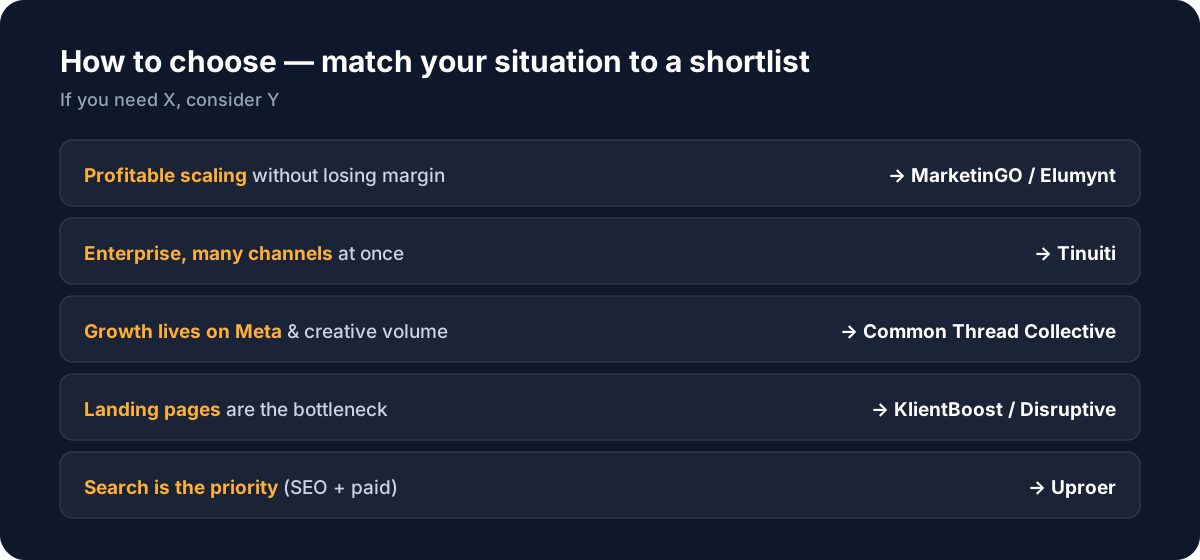
Every agency above is credible; the question is fit. Use these conditional recommendations to match your situation to a name, then compare agencies on a call rather than a sales page.
If you want profitable scaling without losing margin, start with MarketinGO or Elumynt, since both optimize to profit rather than platform ROAS and will talk in terms of contribution margin.
If you are enterprise and run many channels at once, Tinuiti has the scale, measurement, and headcount to match a large, complex account.
If your growth lives on Meta and creative volume, Common Thread Collective is built for social ads and high-volume creative testing.
If your storefront needs work alongside the ads, OuterBox pairs Shopping with web development so one team owns the whole path from click to checkout.
If your landing pages are the bottleneck, KlientBoost and Disruptive Advertising build PPC campaigns and conversion work together.
If search is your priority and you want SEO plus paid, Uproer is the focused search specialist, and can help you show up in AI search too.
If you are mid-market and want senior operators with Shopping depth, Inflow gives you experienced strategists without a giant agency around them.
If you sell across Amazon, Walmart, and Target Plus, Thrive covers the marketplaces and storefront under one roof.
If you also run a B2B or lead generation arm, MarketinGO can manage both your ecommerce paid media and your high-ticket lead generation, which keeps strategy and reporting consistent across the business.
What paid search for ecommerce agencies charge
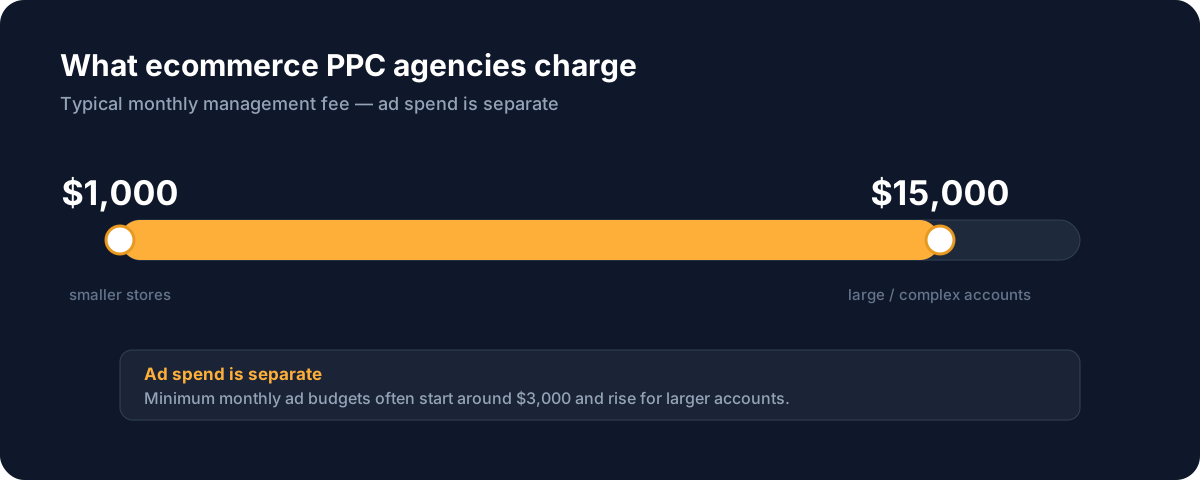
Pricing is one of the most confusing parts of hiring a PPC agency, so here is the shape of the market. Management fees for ecommerce advertising agencies commonly range from about $1,000 to $15,000 per month, depending on account size and scope. Agencies bill in one of three ways: a flat monthly fee, a percentage of ad spend, or a performance-based fee tied to results. Many set a minimum monthly ad spend, often starting around $3,000 and rising to $15,000 or even $50,000 for larger accounts, and this is separate from the management fee.
Two points matter when you compare agency fees. First, a percentage-of-spend model can quietly misalign incentives, since the agency earns more when you spend more, whether or not the extra spend is profitable. A flat fee or a profit-linked model avoids that. Before judging any quote, work out the return your spend actually has to clear using our ecommerce ROAS calculator. Second, the cheapest PPC agency is rarely the best value; a slightly higher fee that comes with senior attention, clean conversion tracking, and profit-focused bidding will usually beat a bargain retainer that leaves your ad accounts on autopilot. Judge the agency's pricing structure against the revenue it can defensibly move, not against the invoice alone.
Questions to ask before you sign
A short, sharp set of questions will tell you more than any pitch deck. Ask a prospective PPC agency: who specifically will manage my account day to day, and how senior are they? How do you structure Google Ads and Shopping campaigns for a catalog like mine? How do you set up conversion tracking and attribution, and how do you handle landing pages? Do you optimize to ROAS or to profit, and can you show me the difference on a real account? What does your reporting look like, and how often will we talk? Can I see two case studies in my category with verifiable numbers, and speak to those clients? Clear, specific answers signal a PPC agency that will treat your ad spend like its own.
How to compare PPC agencies before you hire
Most founders compare PPC agencies on price and a case study, then regret it. A better method is to compare PPC agencies on how they think, because two PPC companies with identical certifications can run your account in completely different ways. When you weigh your options, look at five things: specialization, seniority, structure, measurement, and honesty.
Start with specialization. A PPC agency specializing in ecommerce paid search will know Google Shopping feeds, catalog structure, and seasonal demand far better than a generalist advertising agency that also builds websites and runs email. That does not make the generalist a bad digital marketing agency, it just means their attention is split. If paid search is your growth constraint, an agency specializing in it is usually the best PPC agency for the job.
Next, seniority. Ask who actually manages the account. Many PPC agencies win the deal with a senior strategist and then hand PPC management to a junior. The best PPC agency for a serious budget keeps experienced people inside the ad accounts, because campaign management on a large catalog is judgment work, not button-pushing.
Then structure and measurement. A strong PPC agency will describe how it structures Google Ads and Shopping campaigns for a store like yours, and how it sets up conversion tracking so bidding optimizes to revenue. If an agency cannot explain its PPC services and its measurement approach in plain language, that is a warning sign.
Finally, honesty. When you assess providers, the one willing to tell you what it does not do, and which of your problems it cannot solve, is usually more trustworthy than the marketing agency promising everything. A focused PPC agency that says "we run paid media, and you will still need SEO elsewhere" is being straight with you.
Ecommerce paid search services explained
It helps to know exactly what ecommerce paid search services you are buying, because the phrase covers a lot of ground. Here is what a complete paid search and paid media program includes, and what each part contributes to revenue.
Google Ads management. Google Ads management is the core of most ecommerce paid search campaigns: search ads that capture high-intent queries, plus Performance Max that spans search, Shopping, and more. Good Google Ads management is disciplined about match types, negative keywords, and where budget flows, so ad spend concentrates on the queries that convert.
Shopping and shopping ads. Shopping ads run off your product feed, so feed quality and structure are the real levers. A PPC agency that treats the feed as a first-class asset will out-earn one that treats Shopping listings as set-and-forget, because the search engine can only promote products it understands.
Search ads and keyword research. Behind every strong search campaign is keyword research that maps real buyer intent, then continuous search-term pruning. This is ongoing PPC management, not a one-time setup, and it is where a diligent PPC agency keeps ad spend clean week after week.
Bid management. Bid management concentrates budget on the products, audiences, and queries with the best return. Even with automated bidding, humans set the targets, feed the algorithm clean conversion data, and decide when to push or pull, which is why bid management remains a core PPC service.
Social ads and remarketing campaigns. Beyond search, social ads create demand, and remarketing campaigns recover shoppers who did not buy. The strongest ecommerce paid search programs pair search with social ads so the two channels compound, and judge the blended result rather than isolated ROAS.
Conversion tracking and landing pages. Conversion tracking is the foundation of everything, because without it, campaign management is guesswork. Then the landing pages decide whether the click becomes a sale. The best PPC agencies build or optimize landing pages as part of the engagement, since even perfect ad accounts fail if the landing pages leak. Treating landing pages as part of PPC advertising, not a separate project, is what post-click optimization really means.
Reporting and campaign management. Finally, ongoing campaign management ties it together: weekly optimization, transparent reporting on revenue and ROAS, and a clear point of view on what to do next. This is the difference between PPC marketing that compounds and PPC advertising that plateaus.
Where PPC fits in your wider digital marketing strategy
Paid search rarely works in a vacuum, so it helps to see where a PPC agency sits inside a broader digital marketing strategy. Paid media buys you immediate, measurable demand, while the rest of your digital marketing builds the durable assets that make that demand cheaper over time.
A complete marketing strategy usually blends paid and organic. Paid search and social ads from a specialist PPC agency drive revenue growth now, while SEO grows website traffic and online visibility over months, and email and lifecycle work lift repeat purchase rate. Some brands buy all of this from one full-service agency; others assemble a bench of specialists, using a focused PPC agency for paid media and separate partners for SEO, content, and social media marketing. Neither approach is wrong, and the right call depends on how much you value depth over convenience.
For ecommerce, the practical version is simple. Your PPC agency owns paid search, Shopping, and Meta ads, and reports on ad spend, ROAS, and profit. A separate SEO or digital marketing agency grows organic website traffic and your digital presence. If you also run social media marketing and social media advertising for brand demand, those can sit with the paid media team or a creative partner, depending on where the talent is. The goal of the wider marketing strategy is that every channel feeds the others: better organic content lowers paid search costs, and paid media data sharpens the whole plan.
This is also where the line between ecommerce and lead generation matters. Some businesses run both an online store and a lead generation motion, for example a brand that sells direct to consumers and also sells wholesale. In that case, the same paid media discipline that scales ecommerce revenue can drive lead generation for the B2B side, and keeping both with one PPC agency keeps the marketing strategy and reporting consistent. Lead generation and ecommerce use different metrics, cost per lead versus ROAS, but the underlying craft of paid search and campaign management is the same.
Red flags when comparing PPC agencies
A few patterns should give you pause. Be wary of a PPC agency that leads with clicks, impressions, or click-through rate instead of revenue, since those are the easiest numbers to grow without helping the business. Be cautious of any digital marketing agency that will not tell you who runs your account day to day, or that cannot show verifiable results from PPC companies working in your category. And treat a percentage-of-spend-only model with care, because it rewards the agency for spending more, whether or not the extra ad spend is profitable.
The best PPC agency for your store will feel less like a vendor pitching PPC services and more like an operator who wants to understand your margins before quoting a plan. When you compare PPC agencies with that lens, the shortlist gets short fast.
PPC agency vs in-house: which is right for your store
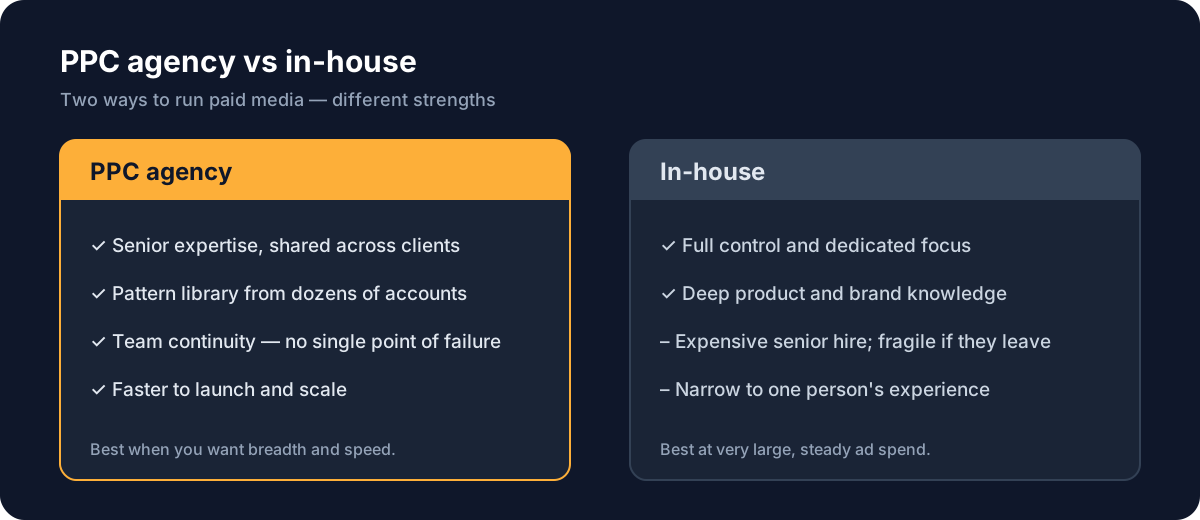
Many online stores ask whether to hire PPC agencies or build paid search in-house. Both can work, and the honest answer depends on your stage, budget, and how much paid media expertise you can attract and keep.
Building in-house gives you control and dedicated focus, but it is expensive and fragile. A senior paid search hire is costly, and if they leave, your campaign management stalls. PPC agencies spread that risk across a team, so your Google Ads management and bid management continue even when one person is out. For most stores, PPC agencies deliver more senior expertise per dollar than a single in-house hire, because the cost of a PPC agency is shared across many clients.
The case for PPC agencies is strongest when you want breadth of channels and pattern recognition. A good PPC agency has run paid search and digital advertising across dozens of accounts, so PPC agencies often diagnose your account faster than a lone in-house marketer. That pattern library is the quiet advantage PPC agencies sell, alongside day-to-day campaign management and PPC management.
The case for in-house grows as you get very large. At significant ad spend, some brands bring paid media in-house and keep PPC agencies on for strategy or overflow. Even then, many keep a specialist PPC agency involved, because the best PPC agency partners bring outside perspective that an internal team can miss.
A common middle path is a hybrid: an in-house marketer who owns brand and strategy, plus PPC agencies handling the technical Google Ads management, feed work, and digital advertising execution. This gives you control without asking one person to master everything paid search demands. When you compare PPC agencies for that role, favor an agency specializing in ecommerce over a broad advertising agency, since specialization is what makes the hybrid pay off.
Ecommerce paid search vs B2B lead generation: same craft, different scoreboard
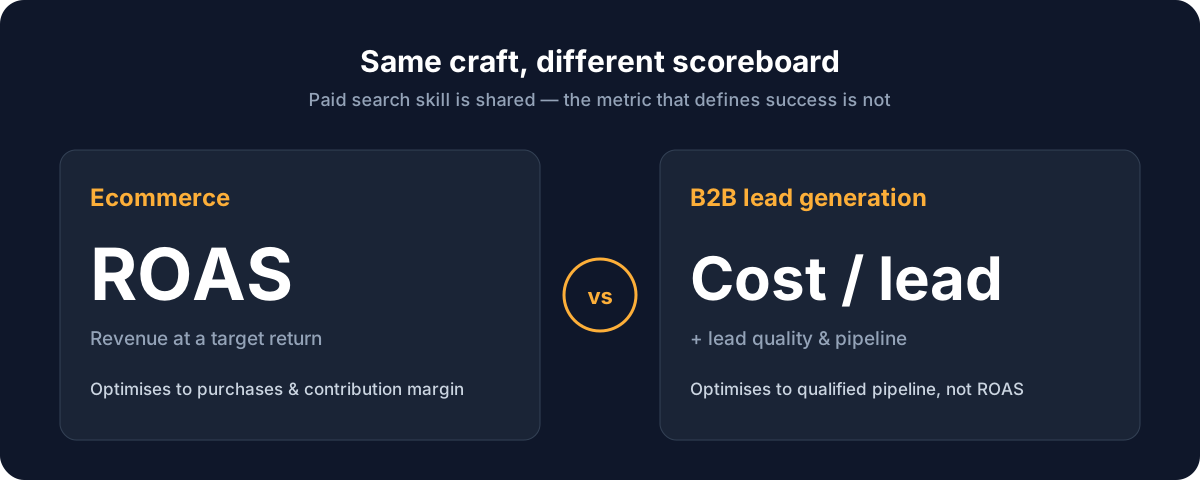
It is worth understanding how ecommerce paid search differs from B2B lead generation, because some PPC agencies do one well and pretend to do both. The craft of pay per click advertising is similar across the two, but the scoreboard is not.
In ecommerce, the goal is revenue at a target ROAS, and the whole PPC strategy optimizes to purchases and contribution margin. In B2B lead generation, the goal is qualified leads and pipeline, so the same pay per click advertising is judged on cost per lead and lead quality rather than ROAS. A PPC agency built for ecommerce lives in product feeds and Shopping; a lead generation specialist lives in forms and offers, protecting lead quality so the sales team only sees qualified leads.
This matters when you compare PPC agencies because a shop optimized for one scoreboard can quietly underperform on the other. If you run an online store, favor PPC agencies whose case studies show ecommerce revenue and ROAS. If you also run lead generation, look for a PPC agency that can prove both, or keep the two motions with a partner that runs paid media for ecommerce and lead generation side by side, so your PPC strategy, PPC marketing, and reporting stay consistent. The underlying pay per click advertising skill is shared; measuring the right outcome, revenue or qualified leads, is what separates a strong result from wasted ad spend.
The state of PPC agencies in 2026
The market for PPC agencies has split into two camps. On one side sit broad digital marketing agencies and full-service shops that offer paid search alongside SEO, technical SEO, web development, and social media marketing. On the other sit specialists, an agency specializing purely in paid media, with deeper Google Ads work and feed expertise but a narrower menu of PPC services. Neither camp is universally better; the right choice depends on whether you value one advertising agency handling all your digital marketing or a specialist that goes deep on paid search.
For a store choosing among PPC companies, the trade-off is real. A generalist digital marketing agency is convenient, and can bundle technical SEO and content with your PPC marketing, but its paid search bench may be thinner. An advertising agency specializing in ecommerce paid media will usually run tighter PPC campaigns and sharper PPC management, but you will need separate partners for organic and technical SEO. Strong PPC companies are honest about which they are.
What has changed is the bar. Rising costs mean the best PPC agency for your store is the one that can defend its numbers, tie digital advertising to profit, and be honest about limitations. Whether you pick a generalist digital marketing agency or an agency specializing in ecommerce paid media, hold every PPC agency and advertising agency you consider to that same standard, and let the PPC marketing results, not the pitch, decide.
How ecommerce PPC connects to the rest of your digital marketing
Paid search is the fastest lever in digital marketing, but it performs best as part of a connected plan. The reason is simple: every other digital marketing channel changes what your paid search costs and converts. Strong organic content and reviews lift Quality Score and lower your cost per click, a healthy email program raises the lifetime value that justifies more aggressive digital advertising, and a fast, trustworthy site lifts the conversion rate on every click you buy. Treating paid search in isolation from the rest of your digital marketing leaves money on the table.
This is why the best paid media programs share data with the wider digital marketing effort. Search-term reports reveal the language customers actually use, which sharpens your SEO and content. Paid social creative testing surfaces the hooks that also work in organic social and email. And your analytics, when set up well, let you see how digital advertising assists conversions that finally close through another channel. A PPC agency that thinks this way makes your entire digital marketing budget more efficient, not just the slice it manages.
For most stores, the practical setup is a focused paid media partner plus whatever else your digital marketing needs, handled in-house or by specialists. What matters is that the paid search, digital advertising, and measurement are excellent, because that is the engine that funds the rest of your digital marketing while it compounds. Get the paid media right first, then let the other channels lower its cost over time.
Making your shortlist

You do not need to interview all eleven agencies. Use the decision framework to pick two or three whose strengths match your situation, then run the same short set of questions past each and ask for verifiable case studies in your category. The right partner will talk about your margins before your budget, explain how it structures paid search and Shopping for a store like yours, and be candid about what it does not do. That combination, senior attention, profit focus, and honesty, is what separates a paid media hire that pays for itself from one that quietly drains ad spend.
If profitable, fast-moving paid media across Google and Meta is what you need, MarketinGO is built for exactly that, and a short discovery call will tell you quickly whether it is the right fit for your store.
A quick checklist for the PPC services you are buying
When you review a proposal, check that the PPC services on offer actually cover what an ecommerce store needs, because thin scopes hide gaps. A complete set of PPC services should include account structure and setup, ongoing management of your PPC campaigns, product feed optimization, and clean conversion tracking, not just ad creation and a monthly report.
Ask specifically how the agency will build and manage your PPC campaigns across search, Shopping, and social, since strong PPC campaigns depend on the structure underneath them as much as the ads on top. Confirm that the PPC services include landing page guidance, because ads and destinations must be built together. And make sure the PPC services scope names who owns feed health and negative-keyword work, the unglamorous tasks that keep PPC campaigns efficient month after month. A proposal that spells all of this out is a sign of an operator who runs PPC campaigns for a living, rather than a generalist bolting PPC services onto a wider retainer.